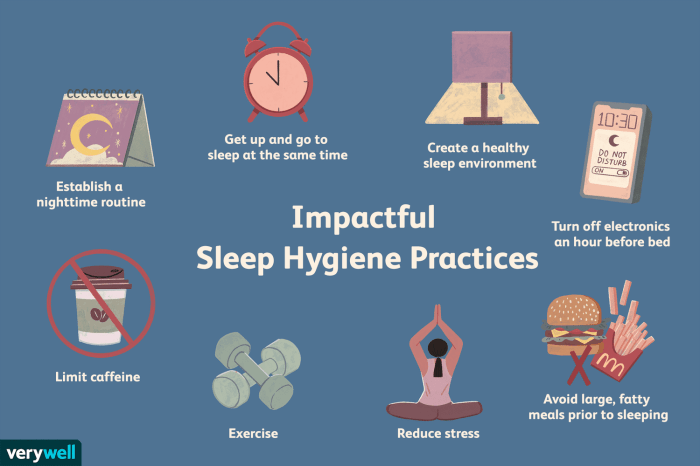
Best sleep hygiene habits for maintaining a healthy circadian rhythm sets the stage for a deeper understanding of how to optimize sleep quality and overall well-being. Our internal clock, known as the circadian rhythm, governs our sleep-wake cycles and plays a vital role in regulating numerous bodily functions.
However, modern life often disrupts this natural rhythm, leading to sleep disturbances and potential health complications. This guide explores essential sleep hygiene practices that can help restore and maintain a healthy circadian rhythm, ensuring a restful night’s sleep and a vibrant, energized day.
By establishing a consistent sleep schedule, optimizing your sleep environment, and incorporating calming pre-sleep rituals, you can create an ideal setting for restful sleep. Additionally, mindful dietary choices, regular exercise, and effective stress management techniques can further enhance your sleep quality.
Sunlight exposure during the day plays a crucial role in synchronizing your circadian rhythm, while avoiding alcohol and caffeine before bed promotes a more peaceful sleep.
Creating a Consistent Sleep Schedule
A consistent sleep schedule is crucial for maintaining a healthy circadian rhythm. This means going to bed and waking up at the same time every day, even on weekends. This helps regulate your body’s natural sleep-wake cycle, ensuring you get enough sleep and wake up feeling refreshed.
Benefits of Maintaining a Consistent Sleep Schedule
A consistent sleep schedule offers numerous benefits, including improved sleep quality, increased energy levels, and enhanced mood. When you maintain a regular sleep-wake cycle, your body learns to anticipate sleep and wakefulness, leading to more efficient sleep. This also helps regulate the production of melatonin, a hormone that helps regulate sleep.
Strategies for Adjusting to a New Sleep Schedule
Adjusting to a new sleep schedule can take time, but it’s essential for improving your sleep quality. Here are some strategies for making the transition smoother:
- Start with small changes:Instead of drastically altering your sleep schedule, gradually shift your bedtime and wake-up time by 15-30 minutes each day. This will allow your body to adjust more easily.
- Create a relaxing bedtime routine:A relaxing bedtime routine signals to your body that it’s time to wind down. This could include taking a warm bath, reading a book, or listening to calming music.
- Avoid caffeine and alcohol before bed:Both caffeine and alcohol can interfere with sleep. Avoid consuming these substances several hours before bedtime.
- Expose yourself to sunlight during the day:Sunlight helps regulate your circadian rhythm, making it easier to fall asleep at night. Spend some time outdoors each day, especially in the morning.
- Make sure your bedroom is dark, quiet, and cool:A comfortable sleep environment is crucial for restful sleep. Ensure your bedroom is dark, quiet, and cool.
- Avoid napping during the day:While naps can be beneficial, they can disrupt your sleep schedule if taken too late in the day or for too long.
- Get regular exercise:Regular exercise can improve sleep quality, but avoid exercising too close to bedtime.
Pre-Sleep Rituals for Relaxation
A consistent pre-sleep routine is essential for signaling to your body that it’s time to wind down and prepare for sleep. By incorporating calming activities into your evening, you can help your mind and body relax, leading to a more restful night’s sleep.
Creating a Relaxing Environment
A calming environment can significantly impact your ability to fall asleep. Dimming the lights, lowering the temperature, and using aromatherapy can help create a tranquil atmosphere conducive to sleep.
- Dim the Lights:As evening approaches, start reducing the brightness of your lights. This signals to your body that it’s time to slow down and prepare for sleep. Avoid using bright screens or overhead lights an hour or two before bedtime.
- Lower the Temperature:Our bodies naturally cool down as we prepare for sleep. Lowering the room temperature by a few degrees can help create a more comfortable sleep environment.
- Aromatherapy:Certain scents, like lavender, chamomile, and sandalwood, have been shown to promote relaxation and sleep. You can use essential oils in a diffuser or add a few drops to a warm bath.
Calming Activities
Engaging in relaxing activities before bed can help clear your mind and prepare you for sleep.
- Reading:Reading a book can help you unwind and escape from the day’s stressors. Choose a book that is light and enjoyable, and avoid anything too stimulating or suspenseful.
- Meditation:Meditation involves focusing on your breath and being present in the moment. It can help calm your mind and reduce anxiety. There are many guided meditation apps available that can help you get started.
- Warm Bath:A warm bath can relax your muscles and promote sleepiness. Add a few drops of essential oils or Epsom salts to enhance the relaxing effect.
- Light Stretching:Gentle stretching can help release tension in your muscles and improve blood circulation. Avoid any strenuous exercises that might make you feel more energized.
- Listening to Soothing Music:Music can have a powerful impact on our mood and emotions. Listening to calming music, like classical or nature sounds, can help you relax and prepare for sleep.
Avoiding Screen Time
The blue light emitted from electronic devices can interfere with melatonin production, a hormone that regulates your sleep-wake cycle. It’s best to avoid screen time for at least an hour before bed.
- Turn off Devices:Put away your phone, tablet, and laptop at least an hour before bedtime.
- Use Night Mode:If you must use electronic devices in the evening, activate the night mode setting on your devices. This reduces the amount of blue light emitted.
- Create a Screen-Free Zone:Designate your bedroom as a screen-free zone. This will help create a more relaxing and sleep-conducive environment.
Dietary Choices for Better Sleep
What you eat and drink can significantly impact your sleep quality. Certain foods and beverages can promote relaxation and improve sleep, while others can disrupt your sleep cycle. Understanding how dietary choices influence your circadian rhythm can help you make informed decisions to improve your sleep hygiene.
Foods That Promote Sleep, Best sleep hygiene habits for maintaining a healthy circadian rhythm
Consuming foods rich in tryptophan, a precursor to serotonin and melatonin, can help regulate your sleep-wake cycle. Tryptophan is an amino acid that the body uses to produce serotonin, a neurotransmitter that promotes relaxation and sleepiness. Serotonin is then converted into melatonin, a hormone that regulates your sleep-wake cycle.
- Turkey:Turkey is a good source of tryptophan, as well as other nutrients that can help you sleep better, such as vitamin B6 and magnesium.
- Salmon:Salmon is rich in omega-3 fatty acids, which have been shown to improve sleep quality.
- Almonds:Almonds are a good source of melatonin, which helps regulate your sleep-wake cycle.
- Chamomile Tea:Chamomile tea contains an antioxidant called apigenin that binds to receptors in the brain that promote sleepiness.
- Kiwi:Kiwis are a good source of serotonin, which can help you fall asleep faster and sleep more soundly.
Foods and Beverages to Avoid Before Bed
Consuming certain foods and beverages close to bedtime can interfere with your sleep.
- Caffeine:Caffeine is a stimulant that can keep you awake and interfere with your sleep. Avoid caffeine for several hours before bed.
- Alcohol:While alcohol may make you feel sleepy initially, it can disrupt your sleep later in the night. Alcohol can also interfere with the production of melatonin, a hormone that regulates your sleep-wake cycle.
- Spicy Foods:Spicy foods can cause heartburn and indigestion, which can make it difficult to sleep.
- Large Meals:Eating a large meal close to bedtime can make it difficult to fall asleep. Give your body time to digest your food before going to bed.
Regular Exercise for Sleep Enhancement
Regular physical activity plays a crucial role in promoting restful sleep. Engaging in exercise can enhance sleep quality by regulating your body’s natural sleep-wake cycle and reducing stress levels.
Timing of Exercise for Optimal Sleep
The timing of your workout can significantly impact your sleep. While exercising at any time is beneficial, engaging in moderate-intensity exercise during the day, particularly in the afternoon, can help promote better sleep. It’s recommended to avoid intense workouts close to bedtime, as they can make it harder to fall asleep.
Incorporating Moderate-Intensity Exercise into Your Daily Routine
Here are some tips for incorporating moderate-intensity exercise into your daily routine:
- Walk briskly for 30 minutes most days of the week.This is a great way to get your heart rate up and improve your overall fitness.
- Take the stairs instead of the elevator.This is a simple way to add some extra steps into your day.
- Go for a bike ride or swim.These are other great options for moderate-intensity exercise.
Managing Stress for Better Sleep
Stress is a significant disruptor of sleep, and it can have a profound impact on our circadian rhythm. When we’re stressed, our bodies release hormones like cortisol, which can make it difficult to fall asleep and stay asleep. This can lead to a vicious cycle, where poor sleep further exacerbates stress levels.
Stress Management Techniques for Better Sleep
Effective stress management techniques can be instrumental in improving sleep quality. These techniques help to calm the mind and body, promoting relaxation and a sense of well-being, which are crucial for achieving restful sleep.
Deep Breathing Exercises
Deep breathing exercises are a simple yet powerful way to manage stress and promote relaxation. They work by slowing down the heart rate, lowering blood pressure, and reducing muscle tension.
Deep breathing exercises involve inhaling deeply through the nose, holding the breath for a few seconds, and then exhaling slowly through the mouth.
Regular practice of deep breathing exercises can significantly improve sleep quality.
Mindfulness Meditation
Mindfulness meditation is a practice that involves focusing on the present moment without judgment. It helps to calm the mind, reduce anxiety, and promote relaxation.
Mindfulness meditation involves paying attention to your breath, body sensations, and thoughts without getting carried away by them.
Regular mindfulness meditation can improve sleep quality by reducing stress and promoting relaxation.
Yoga
Yoga is a practice that combines physical postures, breathing techniques, and meditation. It is known to reduce stress, improve flexibility, and promote relaxation.
Yoga poses like the Child’s Pose, the Legs Up the Wall Pose, and the Corpse Pose are particularly effective in promoting relaxation and improving sleep.
Regular yoga practice can significantly improve sleep quality.
Progressive Muscle Relaxation
Progressive muscle relaxation is a technique that involves tensing and relaxing different muscle groups in the body. This helps to release tension and promote relaxation.
Start by tensing the muscles in your toes, hold the tension for a few seconds, and then release. Repeat this process for other muscle groups, working your way up from your toes to your head.
Progressive muscle relaxation can help to improve sleep quality by reducing muscle tension and promoting relaxation.
The Role of Sunlight and Light Exposure
Sunlight exposure plays a crucial role in regulating our circadian rhythm, the natural sleep-wake cycle that governs our body’s functions. It’s like a natural alarm clock, signaling our bodies when it’s time to wake up and when it’s time to wind down for sleep.
Sunlight Exposure During the Day
Sunlight exposure during the day is essential for the production of melatonin, a hormone that helps regulate our sleep-wake cycle. When our eyes are exposed to sunlight, they send signals to our brains, which then suppress the production of melatonin, making us feel more alert and awake.
Benefits of Sufficient Natural Light
Getting enough natural light during the day offers numerous benefits beyond regulating our sleep-wake cycle.
- Improved Mood and Energy Levels:Sunlight exposure boosts serotonin levels, a neurotransmitter associated with mood and happiness, leading to improved mood and energy levels.
- Enhanced Cognitive Function:Sunlight exposure can improve cognitive function, including memory, attention, and alertness.
- Reduced Risk of Certain Diseases:Studies have shown that sufficient sunlight exposure can reduce the risk of certain diseases, such as depression, seasonal affective disorder (SAD), and some types of cancer.
Maximizing Sunlight Exposure
To maximize sunlight exposure during the day, consider these strategies:
- Get Outside for at Least 30 Minutes Each Day:Aim for at least 30 minutes of outdoor time daily, even if it’s just a short walk or sitting in your backyard.
- Expose Your Skin to Sunlight:While protecting yourself from harmful UV rays, try to expose your skin to sunlight for a short period each day, especially in the morning.
- Use Light Therapy:If you’re unable to get enough natural sunlight, consider using light therapy devices that emit bright light to simulate sunlight.
- Maximize Natural Light in Your Home:Open curtains and blinds to let in natural light during the day.
Avoiding Alcohol and Caffeine
While a nightcap might seem like a good idea to unwind, alcohol and caffeine can disrupt your sleep cycle and make it harder to achieve restful sleep. Both substances interfere with the body’s natural sleep-wake rhythm, potentially leading to fragmented sleep, insomnia, and daytime fatigue.
Impact of Alcohol and Caffeine on Sleep Quality
Alcohol and caffeine, despite their seemingly opposite effects, share a common trait: they disrupt the delicate balance of your circadian rhythm. Alcohol, initially inducing drowsiness, can lead to lighter sleep and frequent awakenings later in the night. Caffeine, a stimulant, can make it harder to fall asleep and stay asleep, particularly if consumed close to bedtime.
Disruption of the Circadian Rhythm
Alcohol and caffeine can disrupt the natural sleep-wake cycle by interfering with the production and regulation of melatonin, a hormone crucial for sleep onset and maintenance. Alcohol, while initially promoting sleepiness, can later suppress REM sleep, the stage of sleep associated with vivid dreams and memory consolidation.
Caffeine, on the other hand, can block adenosine receptors in the brain, preventing the feeling of sleepiness.
Recommendations for Reducing or Eliminating Alcohol and Caffeine Consumption Before Bed
- Limit Alcohol Intake:Avoid alcohol consumption for at least four hours before bedtime. This allows the body sufficient time to process the alcohol and minimize its disruptive effects on sleep.
- Avoid Caffeine:Refrain from consuming caffeine, including coffee, tea, soda, and chocolate, for at least six hours before bedtime. This gives your body ample time to metabolize caffeine and avoid its stimulating effects.
- Consider Alternatives:Opt for relaxing beverages like herbal tea or warm milk instead of caffeinated drinks in the evening.
- Be Mindful of Hidden Caffeine:Check food labels for caffeine content, as it can be found in unexpected sources like pain relievers, energy drinks, and even some dark chocolate.
Seeking Professional Help
Sometimes, despite your best efforts, sleep problems persist. If you’ve tried implementing good sleep hygiene practices and your sleep remains disrupted, it’s essential to seek professional help. A sleep specialist can diagnose underlying sleep disorders and recommend appropriate treatment options.
Recognizing Sleep Disorders
Identifying the signs and symptoms of sleep disorders is crucial for seeking timely professional assistance. These disorders can significantly impact your overall health and well-being.
- Excessive daytime sleepiness:Feeling tired and sluggish during the day, despite getting enough sleep at night.
- Insomnia:Difficulty falling asleep, staying asleep, or waking up too early.
- Sleep apnea:Repeated pauses in breathing during sleep, often accompanied by loud snoring.
- Restless legs syndrome:An irresistible urge to move your legs, especially at night.
- Nightmares or sleep terrors:Experiencing frightening dreams or waking up in a state of panic.
- Sleepwalking or sleep talking:Engaging in complex behaviors while asleep, such as walking or talking.
Finding a Sleep Specialist
Several resources can help you locate a qualified sleep specialist in your area.
- American Academy of Sleep Medicine (AASM):This organization offers a directory of board-certified sleep physicians and sleep centers.
- National Sleep Foundation:This organization provides information about sleep disorders and resources for finding sleep specialists.
- Your primary care physician:Your doctor can refer you to a sleep specialist if they suspect you have a sleep disorder.
The Importance of Professional Help
Seeking professional help for chronic sleep problems is essential for several reasons.
- Accurate diagnosis:A sleep specialist can conduct a thorough evaluation and identify the underlying cause of your sleep problems.
- Effective treatment:Depending on the diagnosis, a sleep specialist can recommend appropriate treatment options, such as medication, therapy, or lifestyle changes.
- Improved quality of life:Addressing sleep disorders can significantly improve your overall health and well-being, leading to increased energy, improved mood, and better cognitive function.
Final Wrap-Up
By implementing these sleep hygiene strategies, you can regain control over your sleep and unlock the full potential of your circadian rhythm. A healthy sleep cycle not only promotes restful nights but also enhances overall health, cognitive function, and emotional well-being.
Remember, prioritizing sleep is an investment in your physical and mental health, paving the way for a more fulfilling and energized life.
Helpful Answers: Best Sleep Hygiene Habits For Maintaining A Healthy Circadian Rhythm
What are the signs of a disrupted circadian rhythm?
Common signs include difficulty falling asleep or staying asleep, feeling tired during the day, experiencing mood swings, and having trouble concentrating.
How can I adjust to a new sleep schedule?
Gradually shift your bedtime and wake-up time by 15-30 minutes each day until you reach your desired schedule. Avoid drastic changes that can disrupt your body’s natural rhythm.
What are some melatonin-rich foods?
Foods rich in melatonin include tart cherries, walnuts, almonds, and oats.
How can I incorporate exercise into my routine?
Aim for at least 30 minutes of moderate-intensity exercise most days of the week. Avoid strenuous activity close to bedtime, as it can interfere with sleep.
When should I seek professional help?
If you experience persistent sleep problems despite implementing sleep hygiene strategies, it’s advisable to consult a sleep specialist to rule out any underlying sleep disorders.