Stress Management
Stress can have a significant impact on the quality of sleep a person gets. When individuals are stressed, their bodies release cortisol, a hormone that can interfere with the ability to fall asleep and stay asleep. This can lead to sleep disturbances, such as insomnia or frequent waking during the night, ultimately affecting overall sleep quality.
Strategies for Managing Stress
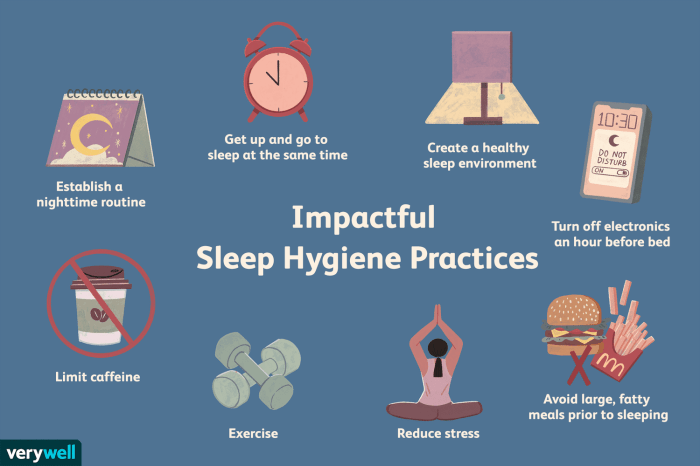
- Practice relaxation techniques such as deep breathing, meditation, or yoga to help calm the mind and body before bedtime.
- Engage in regular physical activity, as exercise is known to reduce stress levels and promote better sleep.
- Establish a bedtime routine that includes activities like reading, taking a warm bath, or listening to soothing music to signal to your body that it’s time to unwind.
- Avoid stimulants like caffeine and electronic devices close to bedtime, as they can exacerbate stress and disrupt sleep patterns.
Relationship Between Stress, Sleep Hygiene, and Overall Health
Stress, sleep hygiene, and overall health are interconnected in a complex way. Poor sleep due to stress can weaken the immune system, increase the risk of chronic conditions like heart disease and diabetes, and impair cognitive function. By managing stress effectively and prioritizing good sleep hygiene practices, individuals can improve their overall health and well-being.
Healthy Lifestyle
Sleep hygiene and the importance of a comfortable sleep environment – A healthy lifestyle plays a crucial role in promoting better sleep hygiene. By adopting healthy habits, individuals can create a comfortable sleep environment and improve the quality of their sleep.
Examples of Healthy Habits
- Avoiding caffeine and heavy meals close to bedtime can help in falling asleep faster and experiencing deeper sleep.
- Engaging in regular physical activity during the day can aid in reducing stress and promoting better sleep at night.
- Establishing a consistent sleep schedule by going to bed and waking up at the same time every day can regulate the body’s internal clock.
- Creating a relaxing bedtime routine, such as reading a book or taking a warm bath, can signal the body that it’s time to wind down and prepare for sleep.
- Ensuring the sleep environment is conducive to rest by keeping the room dark, quiet, and at a comfortable temperature.
Impact of Lifestyle Choices on Sleep Quality
Lifestyle choices have a direct impact on the quality of sleep individuals experience. By prioritizing healthy habits and making positive lifestyle changes, individuals can enhance their overall sleep hygiene, leading to improved sleep quality and overall well-being.
Medical Innovations
In today’s modern world, medical innovations play a crucial role in optimizing sleep hygiene and improving the quality of sleep for individuals. These advancements not only aid in diagnosing and treating sleep disorders but also provide innovative solutions to enhance overall sleep health.
Technological Advancements for Sleep Hygiene
- Smart Sleep Trackers: Devices that monitor sleep patterns and provide insights for better sleep quality.
- White Noise Machines: Help mask background noises and create a soothing environment for better sleep.
- Light Therapy Devices: Assist in regulating circadian rhythms and improving sleep-wake cycles.
- Sleep Apps: Offer guided meditations, relaxation techniques, and sleep tracking features for optimal sleep routines.
Role of Medical Innovations in Sleep Disorder Diagnosis and Treatment
- Polysomnography: Advanced sleep study tests that monitor brain waves, heart rate, and breathing patterns during sleep to diagnose disorders like sleep apnea and narcolepsy.
- Continuous Positive Airway Pressure (CPAP) Machines: Effective treatment for sleep apnea by keeping airways open during sleep.
- Cognitive Behavioral Therapy for Insomnia (CBT-I): Non-pharmacological treatment involving therapy sessions to address sleep disturbances and improve sleep habits.
Enhancing Sleep Quality with Innovative Solutions
- Smart Mattresses: Beds equipped with sensors to adjust firmness and temperature for personalized comfort.
- Lighting Control Systems: Automated lighting that mimics natural light patterns to regulate sleep-wake cycles.
- Aromatherapy Diffusers: Using essential oils to create a relaxing atmosphere conducive to sleep.
Nutritional Supplements
When it comes to promoting healthy sleep patterns, incorporating nutritional supplements can play a significant role in enhancing the quality of your rest. These supplements are designed to provide the body with essential nutrients that support relaxation and improve overall sleep quality.
Supplements for Better Sleep
- Melatonin: A hormone that regulates sleep-wake cycles, melatonin supplements can help improve sleep quality and reduce the time it takes to fall asleep.
- Magnesium: Known for its calming effects on the nervous system, magnesium supplements can promote relaxation and improve sleep quality.
- L-theanine: An amino acid found in green tea, L-theanine can help reduce stress and anxiety, leading to better sleep quality.
Nutrition, Supplements, and Sleep Hygiene
Proper nutrition plays a crucial role in supporting overall health, including sleep quality. By incorporating supplements that target specific sleep-related issues, you can enhance your sleep hygiene and establish a more restful bedtime routine.
Incorporating Supplements into Your Routine
It is important to consult with a healthcare professional before adding any new supplements to your routine, especially if you are taking medications or have underlying health conditions. Start by introducing one supplement at a time and monitor its effects on your sleep quality. Consider taking supplements with a bedtime snack to enhance absorption and maximize benefits.
Fitness Routine
Regular exercise is not only beneficial for physical health but also plays a crucial role in improving sleep quality. Engaging in a fitness routine can help regulate sleep patterns, reduce stress, and promote relaxation, leading to a more restful night’s sleep. When it comes to creating a fitness routine that complements a comfortable sleep environment, certain types of exercises are more effective than others.
Influence of Exercise on Sleep Quality
Regular exercise has been shown to enhance sleep quality by increasing the amount of deep sleep obtained during the night. Deep sleep is essential for the body to repair itself and feel rejuvenated the next day. Additionally, exercise helps reduce symptoms of insomnia and sleep apnea, leading to a more restorative sleep experience.
Best Types of Exercises for Better Sleep
- Aerobic exercises: Activities like walking, running, swimming, or cycling can help improve sleep quality by reducing the time it takes to fall asleep and increasing total sleep time.
- Yoga and stretching: Practicing yoga or engaging in stretching exercises before bedtime can promote relaxation, reduce muscle tension, and calm the mind, making it easier to fall asleep.
- Strength training: Incorporating strength training exercises into your fitness routine can help improve overall sleep quality and increase the amount of time spent in deep sleep.
Tips for Creating a Fitness Routine
- Set realistic goals: Start with manageable exercise routines and gradually increase intensity and duration to avoid burnout.
- Establish a consistent schedule: Try to exercise at the same time each day to regulate your body’s internal clock and improve sleep patterns.
- Avoid vigorous exercise close to bedtime: Intense workouts can increase alertness and make it harder to fall asleep, so aim to finish exercise at least a few hours before bedtime.
Health Screenings
Regular health screenings play a crucial role in identifying sleep-related issues and maintaining good sleep hygiene. By undergoing these screenings, individuals can address any underlying health conditions that may be impacting their sleep quality.
Examples of Relevant Screenings:
- Polysomnography: This test monitors brain activity, eye movements, muscle activity, and heart rhythm during sleep to diagnose sleep disorders such as sleep apnea or insomnia.
- Actigraphy: A non-invasive test that uses a device worn on the wrist to monitor sleep patterns and circadian rhythms, providing valuable data on sleep quality.
- Blood Tests: Checking for factors like thyroid function, iron levels, and glucose metabolism can help identify underlying conditions that may be affecting sleep.
- Epworth Sleepiness Scale: A questionnaire used to assess daytime sleepiness and overall sleep quality, helping to pinpoint potential sleep disorders.
Disease Prevention
When it comes to disease prevention, prioritizing sleep hygiene plays a crucial role in maintaining overall health and well-being.
Poor sleep habits have been linked to a variety of health conditions, including heart disease, obesity, diabetes, and weakened immune function. Lack of quality sleep can also contribute to mental health issues such as anxiety and depression.
The Impact of Sleep Quality on Disease Risk
- Chronic sleep deprivation can increase the risk of developing cardiovascular diseases such as hypertension, heart attacks, and strokes.
- Insufficient sleep is associated with weight gain and obesity due to disruptions in hunger hormones, leading to poor food choices and overeating.
- Individuals with inadequate sleep are more likely to develop insulin resistance, a precursor to diabetes, as the body’s ability to regulate blood sugar is compromised.
- Quality sleep is essential for a strong immune system, as the body repairs and rejuvenates during deep sleep stages, helping to ward off infections and illnesses.
Preventive Measures for Improving Sleep Quality, Sleep hygiene and the importance of a comfortable sleep environment
- Establish a consistent sleep schedule by going to bed and waking up at the same time each day, even on weekends.
- Create a relaxing bedtime routine to signal to your body that it’s time to wind down, such as reading a book or taking a warm bath.
- Ensure your sleep environment is conducive to rest, with a comfortable mattress, supportive pillows, and a cool, dark, and quiet room.
- Avoid stimulants like caffeine and electronics close to bedtime, as they can disrupt your natural sleep-wake cycle.
- Engage in regular physical activity during the day to promote better sleep quality and overall health.
Sleep Hygiene
Sleep hygiene refers to a set of practices and habits that promote good quality sleep and overall well-being. It involves creating a conducive environment and adopting behaviors that enhance the quality and duration of sleep.
Checklist for Optimizing Sleep Hygiene
- Avoid stimulants like caffeine and nicotine close to bedtime.
- Establish a consistent sleep schedule, going to bed and waking up at the same time each day.
- Create a relaxing bedtime routine to signal your body that it’s time to wind down.
- Ensure your sleep environment is cool, dark, and quiet.
- Avoid screens and electronics before bed as the blue light can disrupt your sleep.
- Avoid heavy meals, alcohol, and vigorous exercise close to bedtime.
Tips for Creating a Comfortable Sleep Environment
- Invest in a comfortable mattress and pillows that support your body.
- Use blackout curtains or an eye mask to block out light.
- Keep your bedroom cool and well-ventilated for optimal sleep conditions.
- Remove distractions like clutter, noise, or bright lights from your bedroom.
- Consider using white noise machines or calming scents like lavender to promote relaxation.
Mental Clarity
Sleep hygiene plays a crucial role in maintaining mental clarity and cognitive function. When we prioritize good sleep habits, we are essentially giving our brain the opportunity to rest, recharge, and process information efficiently. This directly impacts our ability to think clearly, focus, and make sound decisions.
Impact of Sleep Hygiene on Mental Clarity and Cognitive Function
- Improved Memory Retention: Adequate sleep allows the brain to consolidate and store information better, leading to enhanced memory recall and learning.
- Enhanced Problem-Solving Skills: Rested minds are more adept at solving complex problems and making rational decisions.
- Increased Attention Span: Quality sleep helps in sustaining focus and attention on tasks, resulting in improved productivity.
Comfortable Sleep Environment and Focus/Productivity
- Optimal Temperature and Lighting: Creating a sleep environment that is cool, dark, and quiet can promote better sleep quality, leading to increased alertness and productivity during waking hours.
- Supportive Mattress and Pillows: Investing in a comfortable mattress and pillows that support proper alignment can prevent discomfort and allow for uninterrupted sleep, contributing to improved cognitive function.
Strategies for Improving Mental Clarity through Better Sleep Habits
- Establishing a Consistent Sleep Schedule: Going to bed and waking up at the same time every day helps regulate the body’s internal clock, promoting better sleep quality.
- Avoiding Stimulants Before Bed: Caffeine, nicotine, and electronic devices should be avoided close to bedtime to prevent disruptions in sleep patterns.
- Creating a Relaxing Bedtime Routine: Engaging in calming activities like reading or meditation before bed can signal to the brain that it’s time to unwind and prepare for sleep.
Hydration Importance: Sleep Hygiene And The Importance Of A Comfortable Sleep Environment
Proper hydration is essential for maintaining overall health and well-being, including the quality of your sleep. Dehydration can lead to various health issues, including poor sleep patterns and discomfort during the night.
Connection Between Hydration and Sleep Quality
Hydration plays a crucial role in regulating your body temperature and ensuring optimal physiological functions, which are essential for a good night’s sleep. When you are dehydrated, your body may struggle to maintain a comfortable temperature, leading to restlessness and disrupted sleep.
Additionally, dehydration can cause muscle cramps, which can be especially uncomfortable when trying to relax and fall asleep. Ensuring you are adequately hydrated can help prevent these issues and promote better sleep quality.
Maintaining Optimal Hydration Levels for Better Sleep
- Drink plenty of water throughout the day, aiming for at least 8-10 cups of water daily.
- Avoid excessive caffeine and alcohol consumption, as they can contribute to dehydration.
- Include hydrating foods in your diet, such as fruits and vegetables with high water content.
- Monitor your urine color to gauge your hydration levels – clear or light yellow urine indicates proper hydration.
Quick FAQs
How does stress impact sleep quality?
Stress can disrupt your sleep patterns, making it difficult to fall asleep or stay asleep throughout the night.
What are some examples of healthy habits that promote a comfortable sleep environment?
Practicing a consistent bedtime routine, keeping your bedroom cool and dark, and avoiding caffeine before bed can all contribute to a comfortable sleep environment.
How can medical innovations help in diagnosing and treating sleep disorders?
Medical advancements like sleep trackers and diagnostic tools can provide valuable insights into sleep patterns, allowing for more targeted treatments of sleep disorders.
What supplements support healthy sleep patterns?
Supplements like melatonin, magnesium, and valerian root are known to promote relaxation and improve sleep quality.
Why is hydration important for a comfortable sleep environment?
Staying hydrated helps regulate your body temperature and can prevent disruptions in your sleep cycle, ensuring a more restful night’s sleep.